Tapioca Sago
Roasted and steam-cooked sago grades, together with Broken Sago from the grading stage.
ATSSMA / Products
Tapioca roots are processed into edible tapioca sago and tapioca starch. Sago grading produces Broken Sago, while root crushing and starch extraction separate a fibrous material locally traded as Thippi.
Roasted and steam-cooked sago grades, together with Broken Sago from the grading stage.
Native starch supplied to food processing, textiles, paper, corrugated packaging, adhesives and other industries.
The fibrous waste residue generated during tapioca starch extraction, commercially handled as Water-wet, Press-wet or Dry Thippi.
A clear classification requires three separate questions: how the sago is processed, its indicative dry size and whether its trade appearance is white or glassy.
RECOMMENDED CLASSIFICATION
Sabudana — Roasted Standard is the common white grade. Moti Sago — Small Roasted is the smaller Motidana/barik grade. Pearl Nylon Sago and Ceylon Nylon Sago are the large and small steam-cooked grades respectively. “Nylon” describes the established glassy sago trade family; it does not indicate synthetic nylon in the food.
Size note: These dry sizes are indicative commercial ranges, not absolute specifications. Size may vary between manufacturers and batches. Confirm the required grade and specification before purchase.
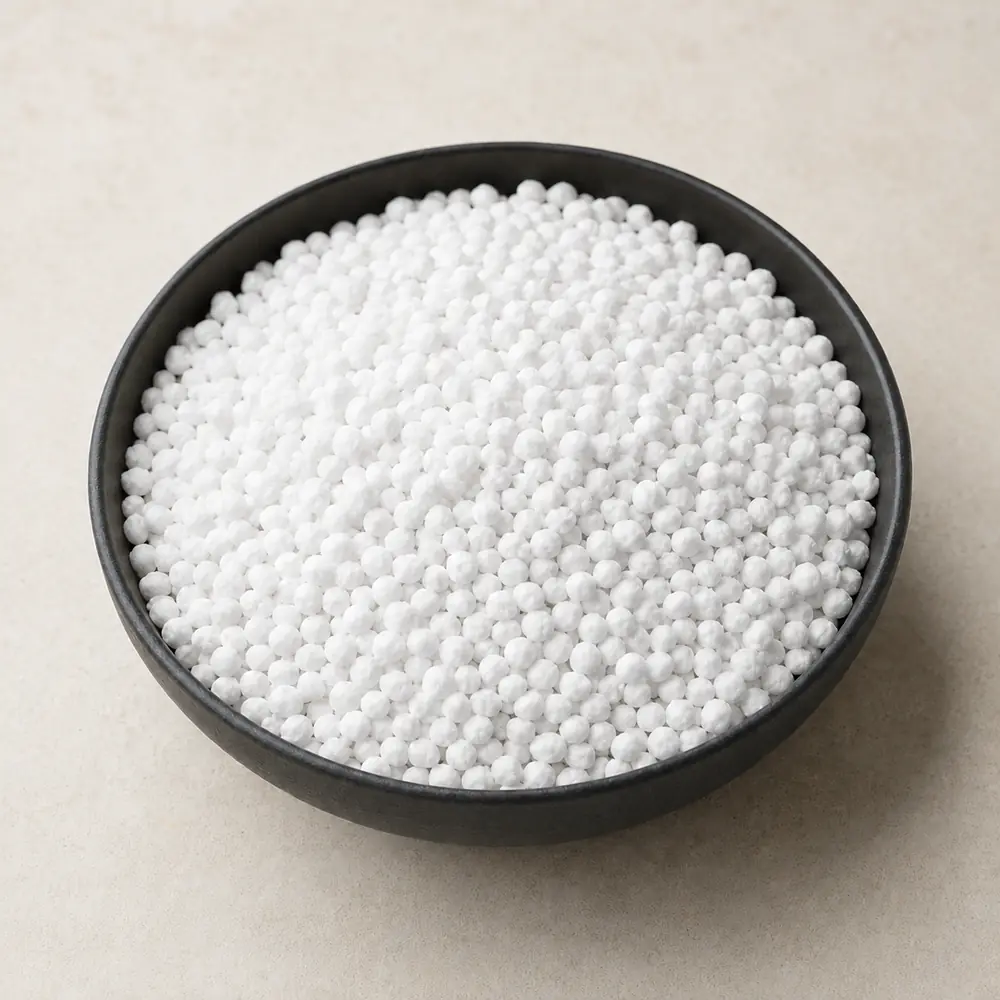
The familiar common white tapioca sago and standard roasted grade. It is also traded as Tapioca Sago, Common White or Super Fine Sago. In the Salem trade, “Super Fine” commonly describes the refined standard roasted grade and does not necessarily mean the smallest size. Indicative dry size: 3–4 mm.
Typical applicationsKhichdi, vada, upma, kheer, payasam and everyday regional dishes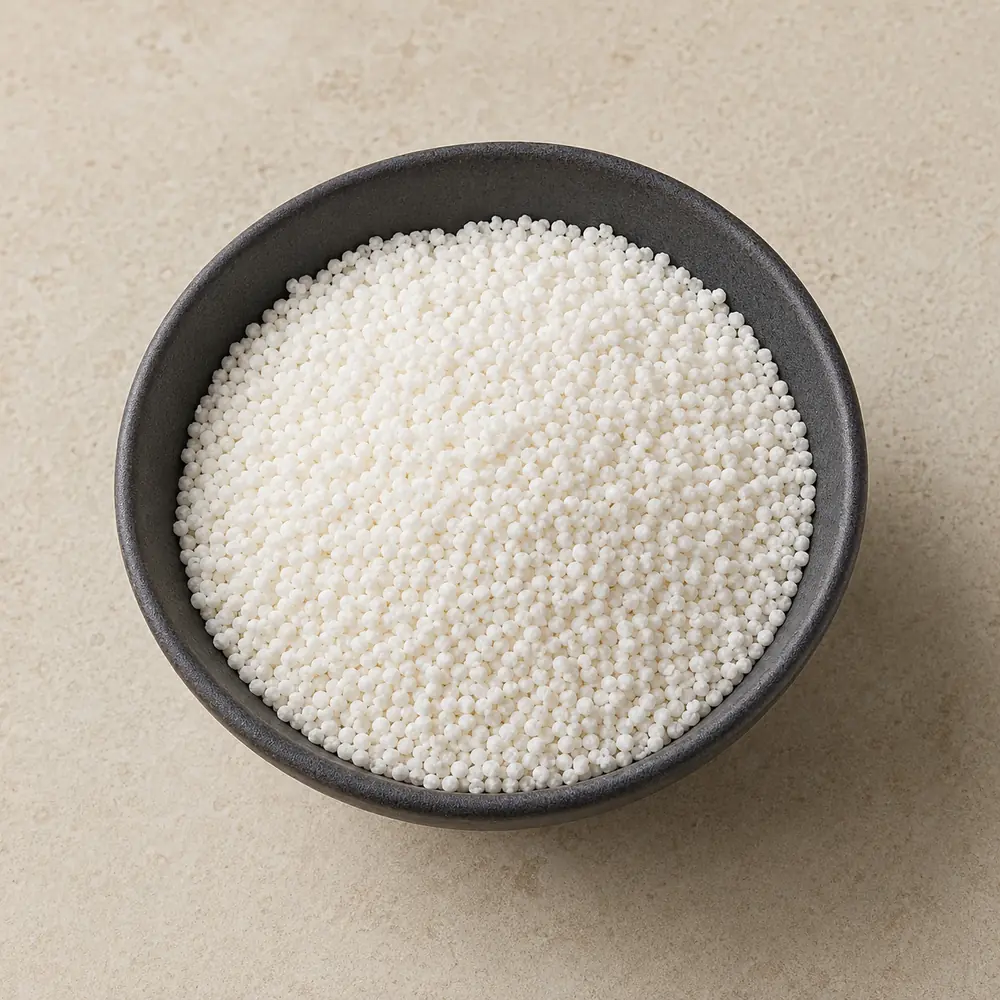
A smaller roasted sabudana grade, commonly known as Motidana. Regional spellings include Mothi, Mothithana and Mothidana. In this trade context, Motidana commonly refers to the smaller or barik roasted grade. Indicative dry size: 2–3 mm.
Typical applicationsKheer, payasam, desserts and preparations preferring a smaller sago size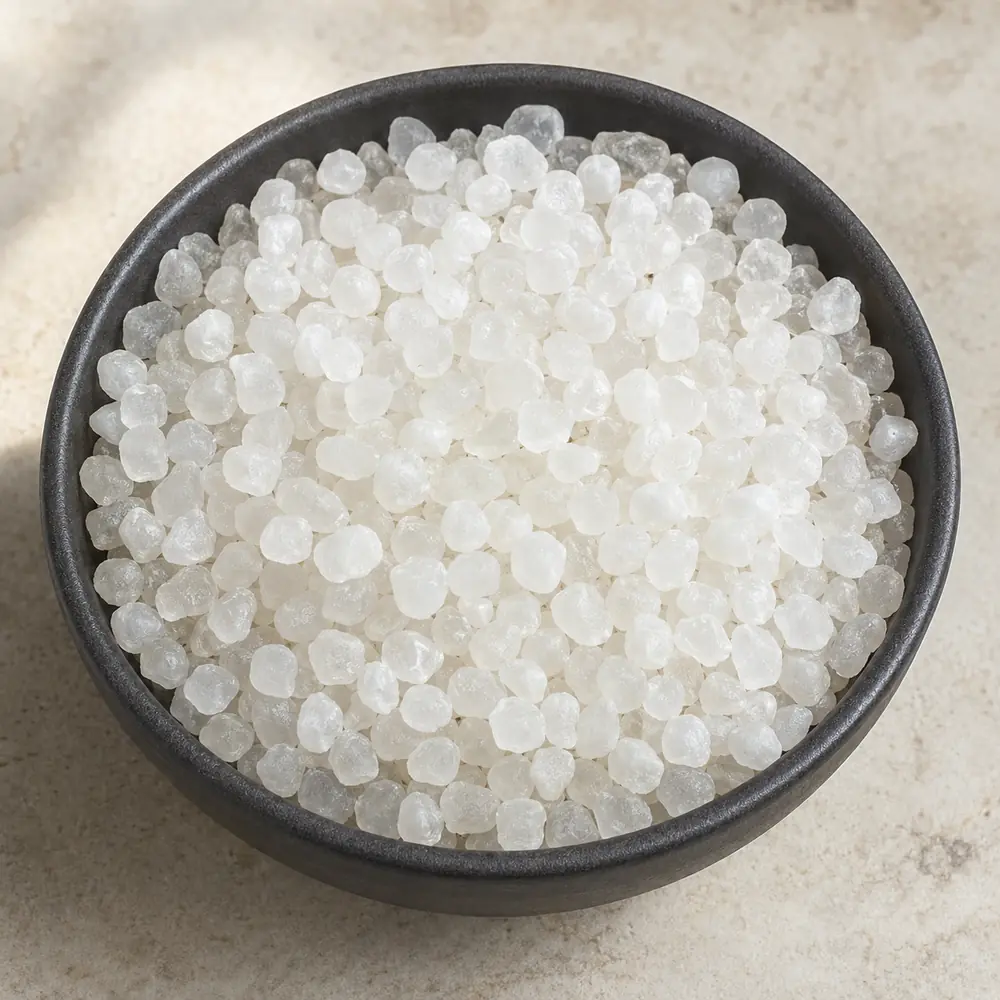
The larger steam-cooked, glassy-looking sago variety. Common trade names include Glass Nylon and Big Nylon. Indicative dry size: 5–8 mm.
Typical applicationsPuffed preparations, papad, fryums and namkeen applications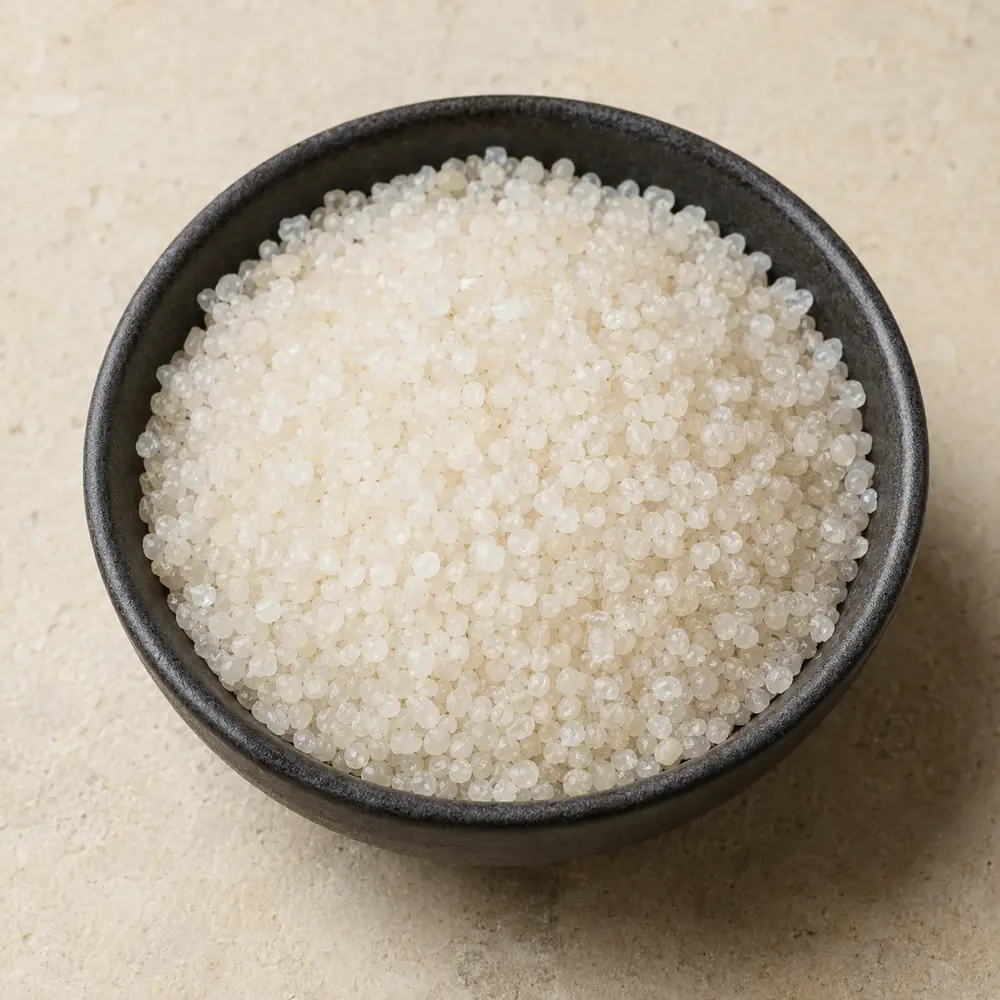
The smaller steam-cooked variety in the glassy Nylon Sago family. Common trade names include Mini Nylon, Small Glass Nylon and Ceylon Glass Nylon. “Ceylon” is a traditional trade-grade name and does not necessarily indicate Sri Lankan origin. Indicative dry size: 2–4 mm.
Typical applicationsKheer and selected fried or puffed applications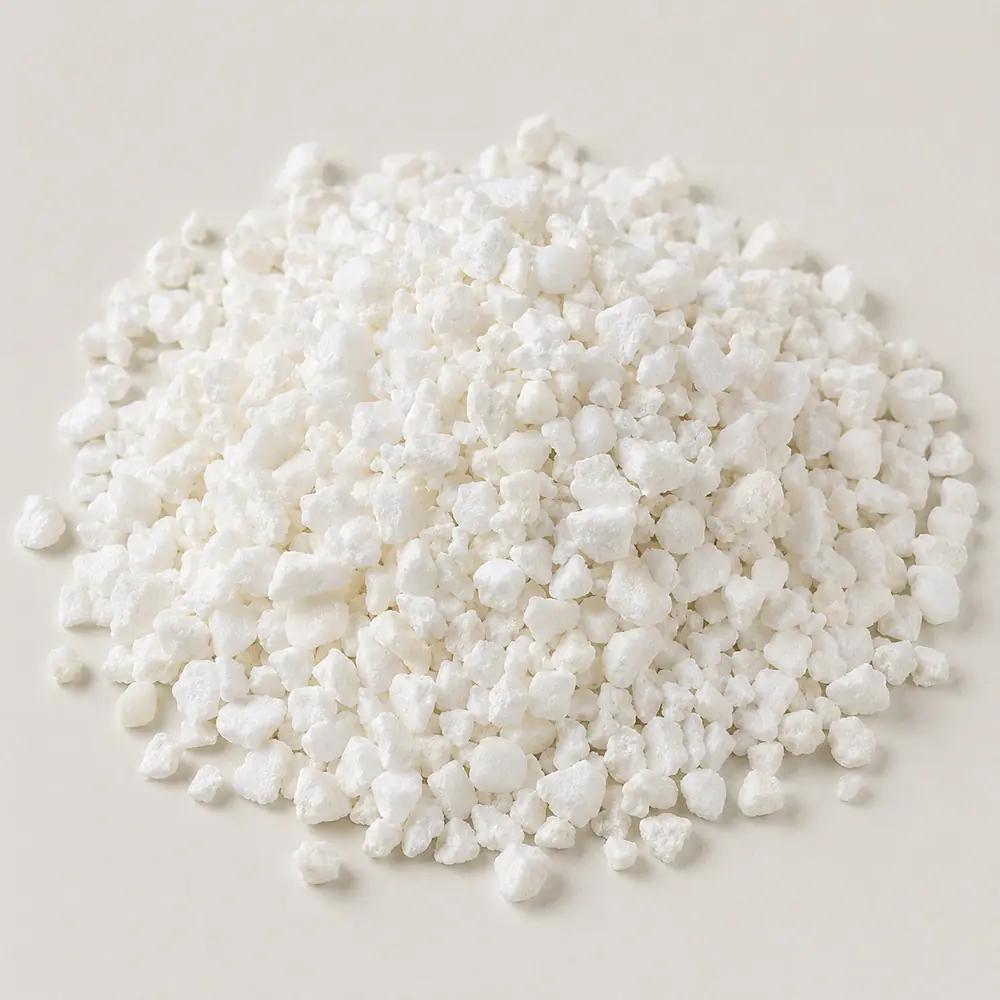
SEPARATE SAGO PRODUCT
Broken Sago is collected while finished tapioca sago is graded and sorted. It contains irregular chips, partial granules and fine sago pieces. Because it retains the starch functionality of tapioca sago, it can be used where a whole, uniform sago appearance is not required.
Requirements differ by application. Food, gluten-free, industrial and packaging uses require appropriate processing, hygiene and product specifications.
STARCH PRODUCT
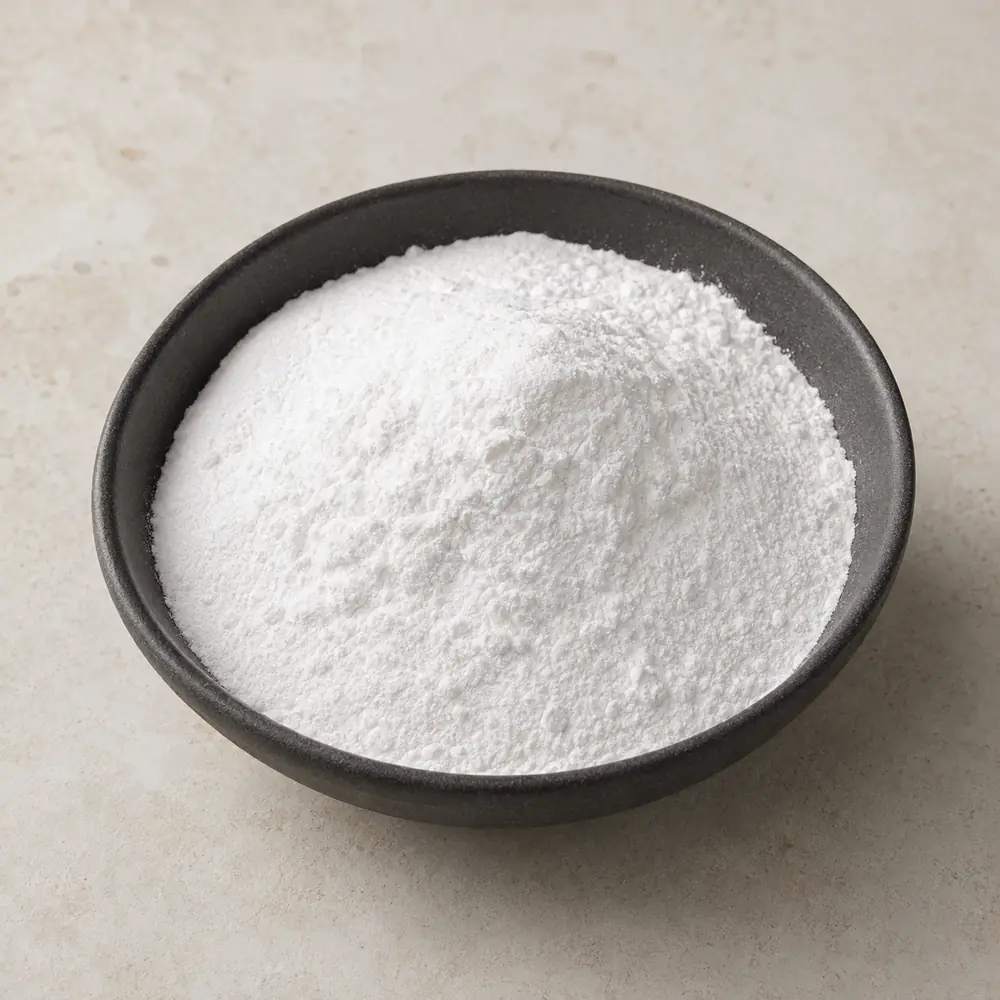
Tapioca starch is recovered from cleaned tapioca roots, separated from fibre and water, dewatered, dried and graded for its intended application.
Thickening, binding, texture development and other functions where the required food specification is met.
Textiles, paper, corrugated packaging, adhesives and other formulations manufactured to the buyer’s technical specification.
TAPIOCA PROCESSING RESIDUE
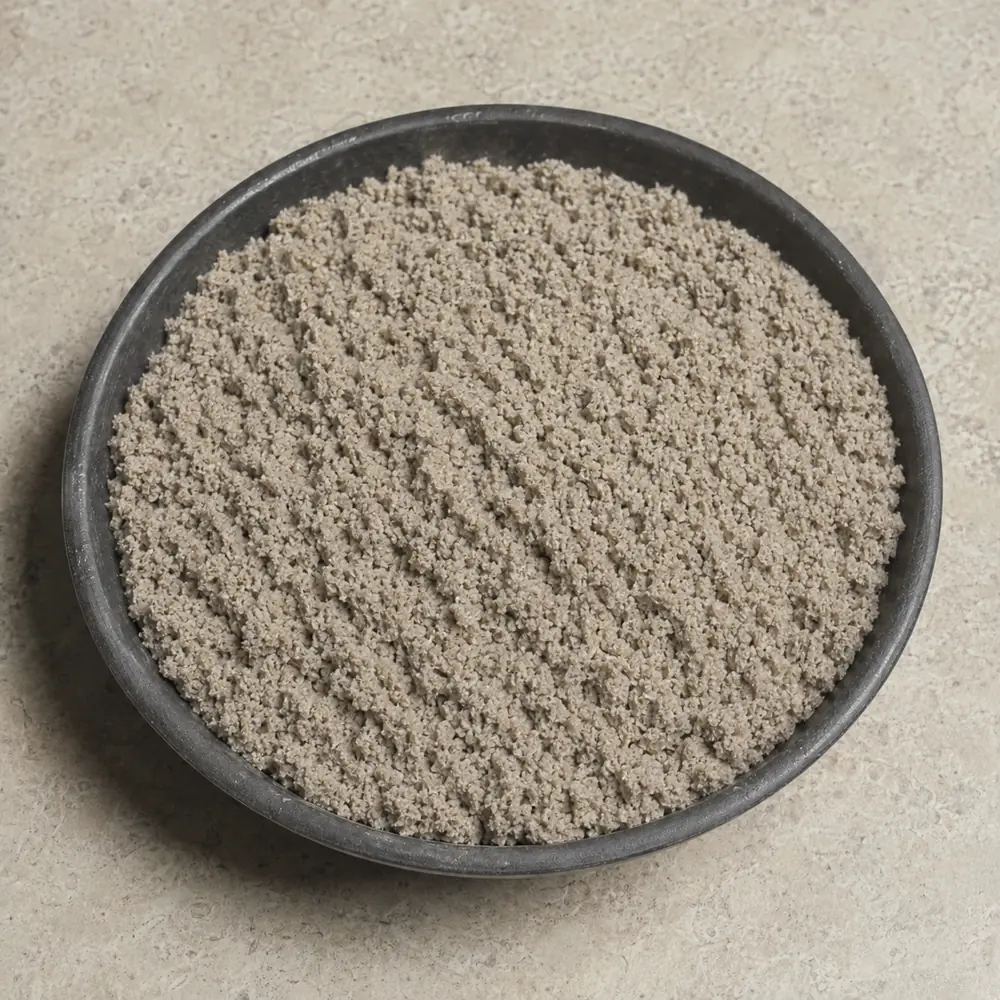
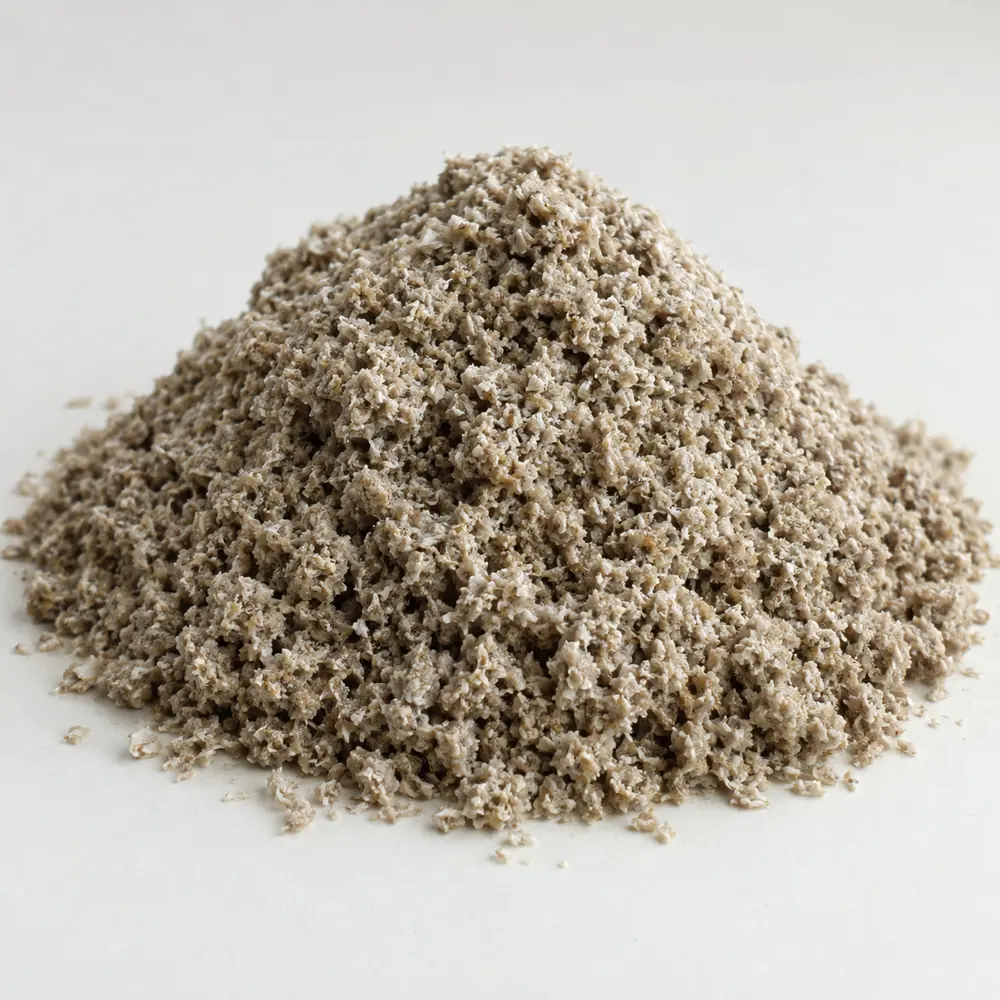
Thippi is the fibrous waste residue generated when crushed tapioca roots are screened during starch extraction. It contains cassava fibre together with residual carbohydrate and is handled in different moisture conditions.
The freshly separated, high-moisture residue. Its water content limits storage time, so collection and movement are normally organised promptly.
Water-wet Thippi after mechanical pressing removes part of the moisture. It is easier to load and transport but remains a wet, perishable residue.
Thippi after drying, with lower moisture for improved storage and transport into the livestock-feed supply chain.
PRIMARY USE
Thippi is used mainly as a carbohydrate- and fibre-bearing raw material in formulated cattle feed and other livestock-feed preparations.
Suitable drying or processing, quality checks and professional feed formulation are important. Commercial assessment commonly considers moisture, residual starch, fibre, sand or foreign matter and storage condition.
GEOGRAPHICAL INDICATION
Salem Sago received Geographical Indication registration in March 2023. In February 2026, the first 0.5 metric-tonne consignment of GI-tagged Salem Sago exported directly by a GI-authorised user was flagged off to Canada.
Use of the Salem Sago GI is governed by the applicable registration and authorised-user framework.Commercial grades and quality specifications may vary. Buyers should confirm processing method, dry size range, appearance, cooking performance, packaging and testing requirements for the intended application.