 ATSSMA
Tamil Nadu
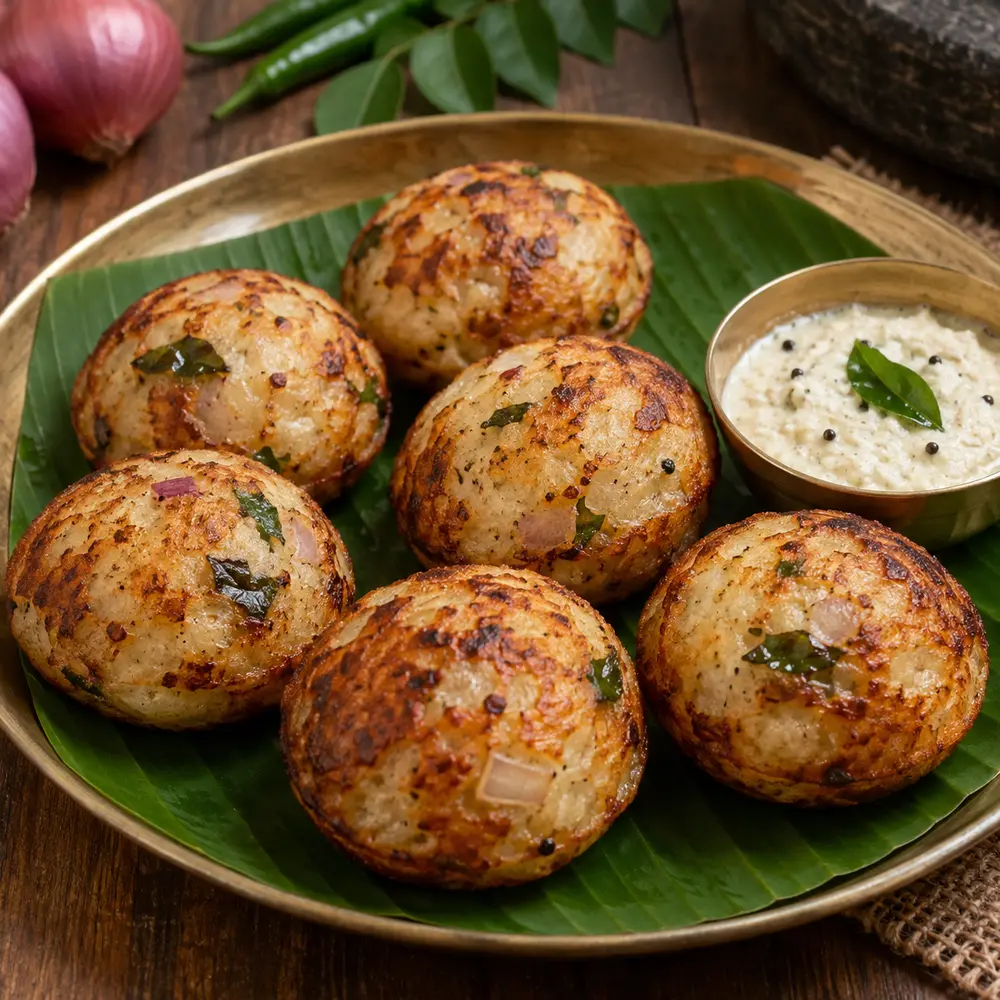
Javvarisi Kara Paniyaram
A javvarisi variation of Tamil kara paniyaram, combining fermented idli-dosa batter with tender sago and an onion, chilli and curry-leaf tempering.
Ingredients
- Fermented idli-dosa batter – 2 cups
- Sago – ¼ cup
- Water – about ¾ cup for soaking and cooking
- Onion – 1 small, finely chopped
- Green chillies – 2, finely chopped
- Ginger – 1 tsp, grated
- Mustard seeds – ½ tsp
- Urad dal – 1 tsp
- Curry leaves – 1 sprig, chopped
- Coriander – 2 tbsp, chopped
- Salt – only if the batter needs it
- Oil – for tempering and the paniyaram pan
Method
- Rinse the sago and soak for about 2 hours. The pearls should be softened before cooking; soaking time varies with size and variety.
- Cook the soaked sago over low to medium-low heat with enough water to keep it moving, stirring often, until tender. Drain excess water if needed and cool completely. Do not add hot sago to fermented batter.
- Heat 1 teaspoon oil. Add mustard; when it splutters, add urad dal and fry lightly golden. Add onion, chilli, ginger and curry leaves and sauté until the onion is soft, not browned.
- Put the fermented batter in a bowl. Fold in completely cooled sago, the tempering and coriander. Taste before adding salt because fermented batter is usually already seasoned.
- The batter should drop slowly from a ladle like normal paniyaram batter. If very thick, add water 1 tablespoon at a time; thin batter gives flat, oily paniyarams.
- Heat the paniyaram pan over medium and lightly oil every cavity. Fill each only about three-quarters full.
- Cover and cook over medium-low heat for 2 to 3 minutes, until the edges are set and release. Add a few drops of oil around the edges if needed.
- Turn and cook the second side uncovered another 2 to 3 minutes until golden. Break open the first one to confirm the centre is set.
- Serve hot with coconut chutney. This version adds javvarisi to familiar fermented-batter kara paniyaram rather than presenting it as the only traditional formula.