 ATSSMA
Tamil Nadu
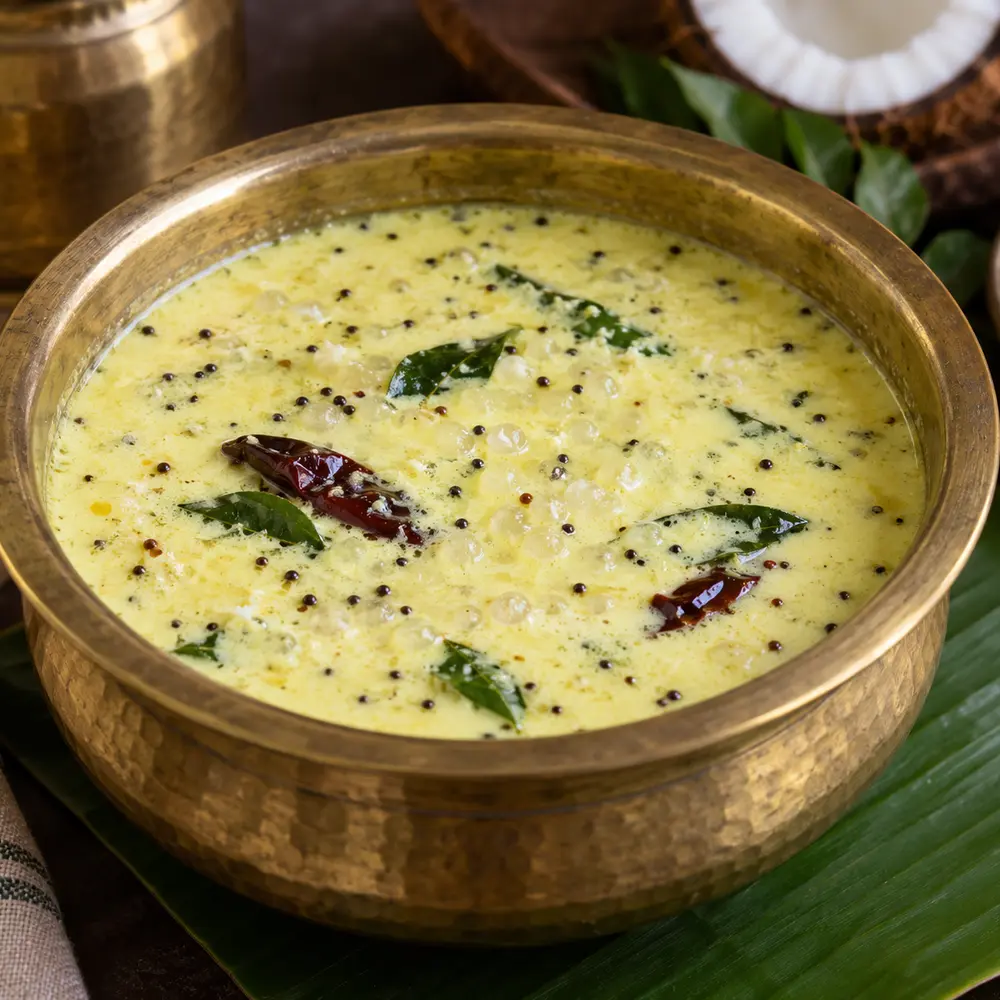
Javvarisi Mor Kuzhambu
A sago variation of Tamil mor kuzhambu: tender javvarisi folded into a coconut-spice and sour-curd base, then gently heated without boiling.
Ingredients
- Sago – ½ cup
- Water – about 2 cups for cooking the sago
- Sour curd – 1½ cups, at room temperature
- Water – ½ to 1 cup to loosen the curd
- Grated coconut – ¼ cup
- Green chillies – 2
- Cumin – 1 tsp
- Raw rice – 1 tsp, soaked for 15 minutes
- Ginger – ½ inch, optional
- Turmeric powder – ¼ tsp
- Mustard seeds – ½ tsp
- Fenugreek seeds – ⅛ tsp
- Dried red chilli – 1
- Curry leaves – 1 sprig
- Salt – as needed
- Coconut oil or neutral oil – 1 tsp
Method
- Rinse the sago and cook gently in about 2 cups water, stirring often, until completely tender. If the water is absorbed before the centre softens, add a little hot water.
- Drain only if a large amount of thin water remains. If the cooked sago begins to clump, loosen it with 1 or 2 tablespoons warm water.
- Grind coconut, green chilli, cumin, soaked rice and optional ginger with a little water to a smooth paste. The soaked rice gives the kuzhambu light body.
- Whisk room-temperature curd until smooth. Add turmeric, salt and ½ cup water; add a little more water if the curd is very thick.
- Cook the coconut paste with about ½ cup water over low to medium-low heat for 3 to 4 minutes so the raw rice and paste are cooked.
- Add the cooked sago. Reduce heat to low and pour in the curd mixture while stirring continuously.
- Warm only until hot and just frothy around the edges, about 2 to 3 minutes. Do not let it reach a rolling boil after adding curd, or it may split.
- Heat oil separately. Add mustard, then fenugreek, dried chilli and curry leaves. Pour over the kuzhambu and switch off.
- Rest 5 minutes and check consistency. Sago thickens the curry as it stands, so add a little warm water if required. This is a javvarisi-enriched variation; mor kuzhambu is more commonly made with vegetables or other additions.